Salt air on coastal stucco: how often the ocean side needs paint
Near the coast, the ocean-facing side of a stucco house wears out first. The warning signs, typical repaint cycles and how a coastal repaint should be done.

If you live on the coastal strip, from Oceanside and Carlsbad down through Encinitas, Cardiff, Solana Beach and Del Mar, you have probably noticed that one side of the house looks tired long before the others. It is usually the side facing the ocean, and it is not your imagination.
Salt carried on the breeze, moisture from the marine layer and strong afternoon sun all work on that elevation every day. This guide explains what is happening to the stucco and the paint, what signs to watch for, how often coastal exteriors typically need attention and what a proper coastal repaint involves. For how we handle the work, see exterior painting.
Why the ocean side ages faster
Salt
Ocean air carries fine salt particles that settle on walls, trim and metal. Salt draws in moisture, and as it wets and dries over and over, it breaks down the paint film and corrodes any metal it touches. Salt left on a wall also interferes with adhesion, which is why new paint applied over an unwashed coastal wall can fail early.
Marine layer moisture
May gray and June gloom are pleasant until you think about what they do to an exterior. Mornings of fog and dew mean the west-facing walls spend more time damp. Stucco is porous, and water that gets in through cracks can lead to staining, efflorescence (white mineral deposits) and paint lifting from beneath.
Afternoon sun
West-facing walls also take the strongest afternoon sun. UV breaks down the binders in paint, which leads to fading and chalking. Darker colors absorb more heat and tend to show it sooner.
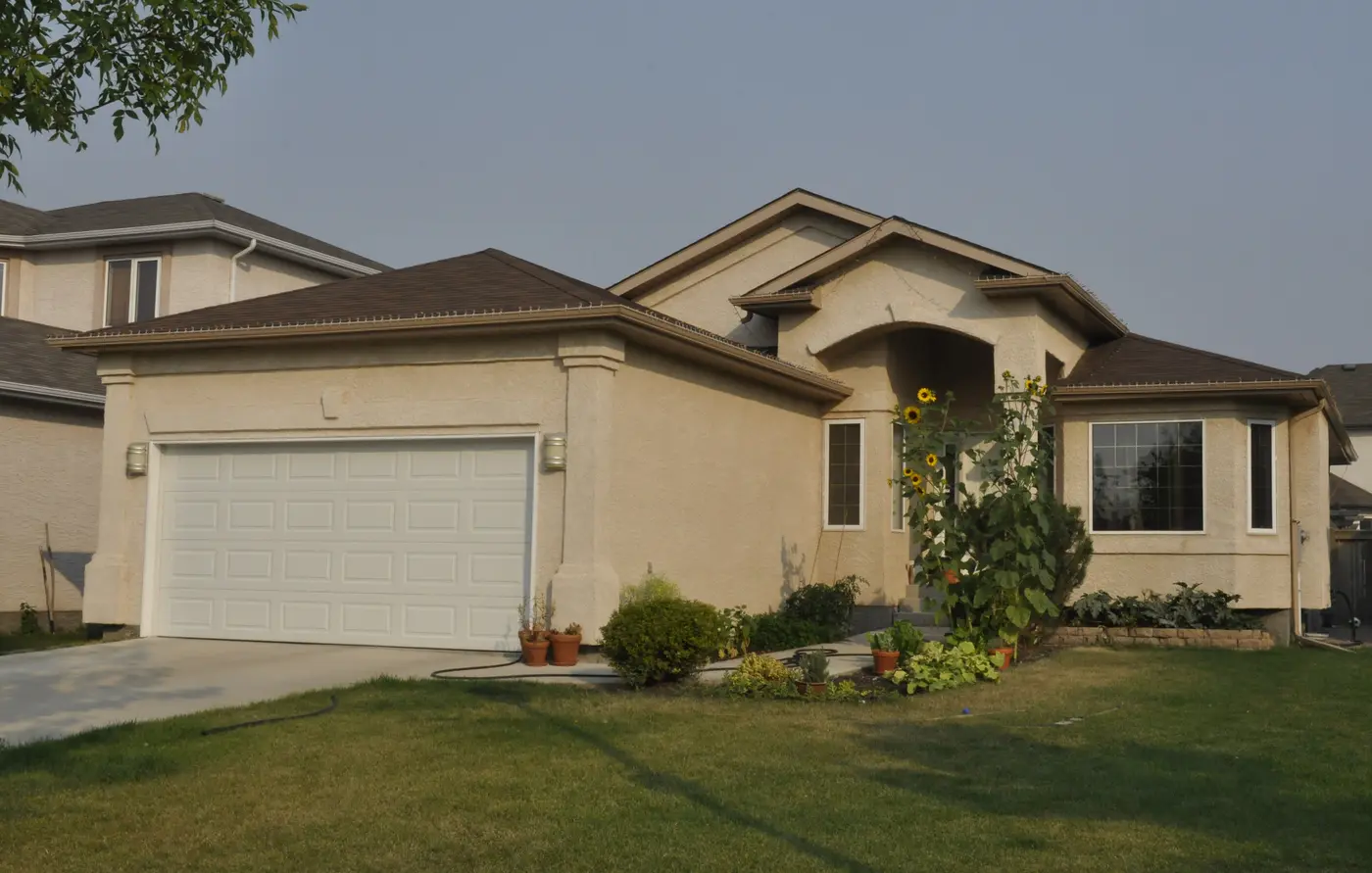
Signs it is time to repaint
Walk around the house and compare each side. Look for:
- Chalking: rub your hand across the wall. A powdery residue means the paint is breaking down.
- Fading: the ocean side looks noticeably lighter than the street side.
- Hairline cracks in the stucco, especially around windows, doors and corners.
- Rust streaks running down from railings, light fixtures, hose bibs and nail heads.
- Peeling or bubbling on fascia, eaves and wood trim.
- White, crusty deposits on the stucco surface, a sign that water is moving through it.
One or two of these on a single elevation is a sign to plan ahead. Several of them, or peeling and open cracks, mean water may already be getting in, and waiting will make the repair bigger.
How often coastal stucco needs paint
There is no single number, because exposure varies so much from house to house. As a general guide:
- Homes right on the bluff or within a few blocks of the water often need the ocean-facing side recoated sooner than a full-house repaint cycle. Shorter intervals are common there.
- Homes a mile or more inland, or sheltered by other buildings and trees, usually last longer between repaints.
- Trim, fascia and metal tend to need attention before the stucco body does.
- Color, coating quality and how well the last job was prepped all make a large difference.
Rather than going by the calendar, inspect each elevation once a year, ideally after winter, and act on what you see.
What a proper coastal repaint involves
Washing
A coastal job starts with a thorough wash to remove salt, dirt, chalk and mildew. The wall then needs to dry fully before anything else goes on. Painting over salt is one of the most common reasons coastal paint fails early.

Crack repair
Hairline cracks are filled with a flexible patching product so they can move without reopening. Larger cracks and damaged areas may need stucco patching and time to cure before priming. Repairs are textured to blend with the surrounding wall.
Metal and rust
Railings, gates, light fixtures and flashing are cleaned of loose rust, sanded and spot-primed with a rust-inhibiting primer before topcoats. Rust that is painted over without treatment will bleed through again. See metal painting for more on this step.

Wood trim and fascia
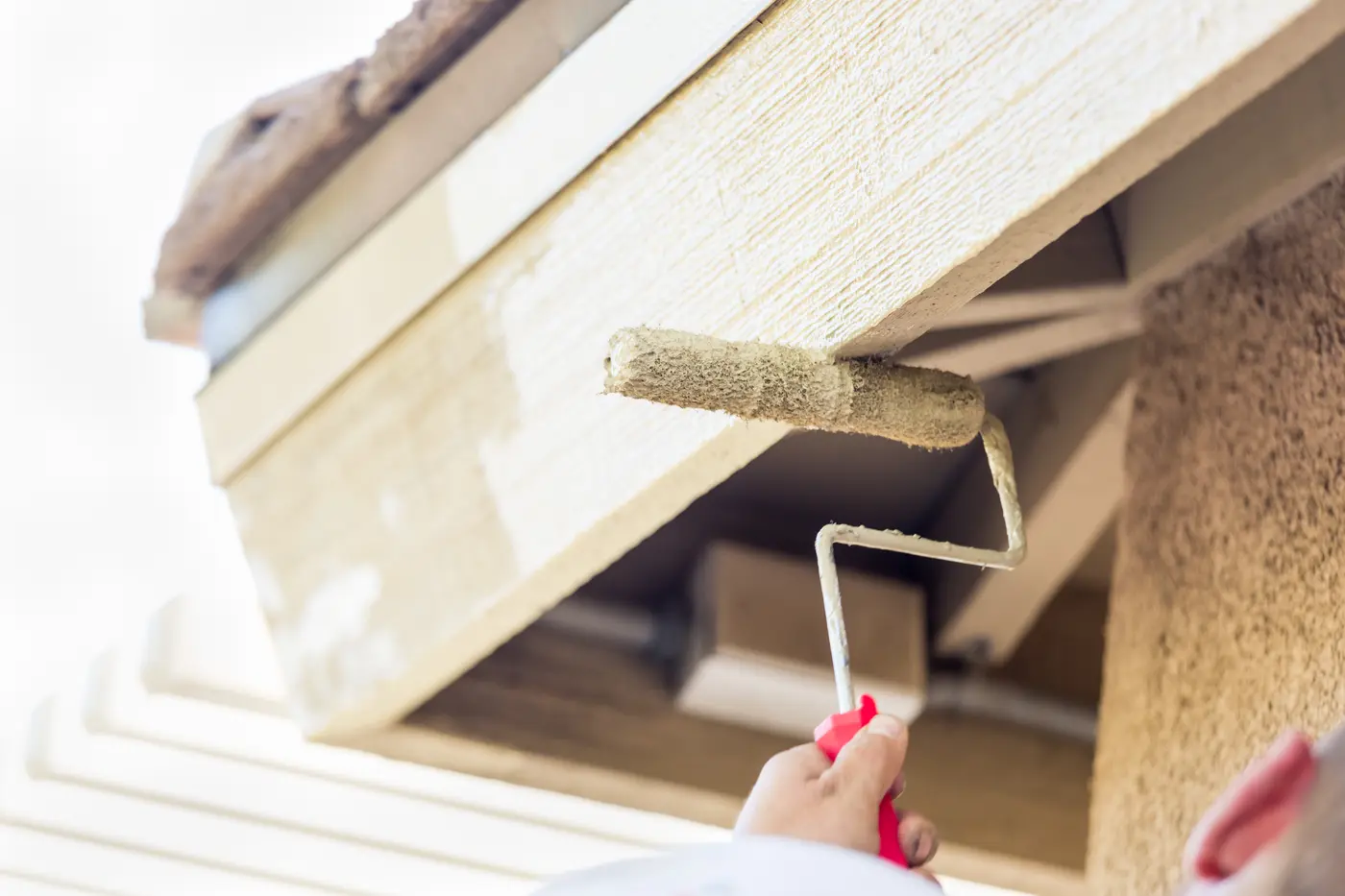
Peeling paint on fascia and eaves is scraped and sanded back to a sound edge. Soft or rotted wood is repaired or replaced before priming. Bare wood gets a primer suited to exterior wood.
The right coating
For most stucco homes, a quality exterior acrylic is a solid choice. Where cracking or water intrusion is a recurring problem, an elastomeric coating can be an option. Elastomerics go on much thicker and stretch to bridge hairline cracks, which helps keep water out. They are not right for every wall: they need proper prep, they can trap moisture if applied over damp stucco, and their texture and sheen look a little different from standard paint. We talk through which suits your house during the estimate. See waterproofing for more on elastomeric work.
Recoat the ocean side between full repaints
Because one elevation usually wears out first, many coastal homeowners recoat just that side, plus the trim and metal on it, partway through the life of a full repaint. It is a smaller job than the whole house and can extend the life of the rest of the paint. It works best when the colors are recorded from the last job so the new coat matches.
Simple maintenance that helps
- Rinse the ocean side with a garden hose a few times a year to remove salt. Avoid high-pressure washing on stucco, which can force water in.
- Keep sprinklers from hitting the walls.
- Trim plants back from the stucco so it can dry out.
- Touch up rust spots on railings as soon as you see them.
- Keep gutters and downspouts clear so water does not run down the walls.
Frequently asked questions
Is elastomeric always better near the coast?
No. It is useful on cracked or water-prone stucco, but a quality acrylic is often the better choice on sound walls. It depends on the condition of the stucco and how the house is exposed.
Can you paint during the marine layer season?
Yes, with timing. Mornings are often too damp, so work on the ocean side may start later in the day once surfaces are dry. Paint should not go on wet stucco.
Should I change color to something lighter?
Lighter colors generally show fading less and absorb less heat. If you are in an HOA, check whether a color change needs approval first.
Get the ocean side checked
If your west wall is chalky, cracked or streaked with rust, it is worth having it looked at before water gets behind the stucco. If your community has design review for exterior colors, our post on painting within the Rancho Santa Fe Covenant walks through how approvals generally work. When you are ready, get a free estimate for your coastal exterior or call (760) 852-7398.
More posts

Venetian plaster, limewash or Roman clay: which finish fits the room
Venetian plaster, limewash and Roman clay all look 'textured', but they differ in sheen, depth, durability and labor. How to pick the right one for each room.
What venetian plaster costs in North County, and why
Venetian plaster pricing swings widely. Here is what drives the number up or down: prep, size, height, polish, coats, access and sealing, and how to keep it in budget.

Painting an exterior in the Rancho Santa Fe Covenant
Inside the Rancho Santa Fe Covenant, exterior changes go through Association review. How to plan colors, samples and scheduling so a repaint runs smoothly.